Comparing differences in wye-delta and part-winding-start connections - ANSI Accredited Standards Developer Information - EASA | The Electro•Mechanical Authority
Facebook Twitter LinkedIn YouTube Menu Search Arrow Right Arrow Left Arrow Down Arrow Up Home Arrow Next Arrow Previous RSS Icon Calendar Icon Warning Icon

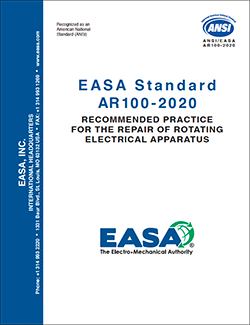
ANSI/EASA AR100-2020 cover

ANSI/EASA Standard AR100-2020
ANSI/EASA AR100-2020: Recommended Practice for the Repair of Rotating Electrical Apparatus is a must-have guide to the repair of rotating electrical machines. It establishes recommended practices in each step of the rotating electrical apparatus rewinding and rebuilding processes.

LEARN MORE & DOWNLOAD

Questions?

For information about ANSI/EASA AR100 or questions about the work on this standard, contact:

Mike Howell, PE
EASA Technical Support Specialist
+1 314 993 2220
mhowell@easa.com

ANSI Accredited Standards Developer Information

Comparing differences in wye-delta and part-winding-start connections

  • February 2001
  • Number of views: 16005
  • Article rating: 4.2

Chuck Yung
EASA Technical Support Specialist

One of the most misunderstood winding connections is the part-winding start. Many customers (and some members) tend to blur the differences between the part-winding-start (PWS) connection and wye-start, delta-run connections.

Let’s review the Wye-Delta first before looking more closely at the part-winding-start connection. The wye-start, delta-run connection is designed to reduce starting current, heating of the windings and rotor, and starting torque. It does this by temporarily connecting the motor for a voltage higher than line voltage.

LOGIN TO VIEW AND DOWNLOAD THE ARTICLE


Print


Comments are only visible to subscribers.

EASA Rewind Study cover

The Effect of Repair/Rewinding on Premium Efficiency/IE3 Motors
Tests prove Premium Efficiency/IE3 Motors can be rewound without degrading efficiency.

DOWNLOAD THE FULL RESULTS

BUY PRINTED COPIES

EASA Good Practice Guide

Good Practice Guide to Maintain Motor Efficiency
Based on the 2019 and 2003 Rewind Studies of premium efficiency, energy efficient, IE2 (formerly EF1) and IE3 motors

LEARN MORE & DOWNLOAD