DC shunt field rewinding wire size considerations - ANSI Accredited Standards Developer Information - EASA | The Electro•Mechanical Authority
Facebook Twitter LinkedIn YouTube Menu Search Arrow Right Arrow Left Arrow Down Arrow Up Home Arrow Next Arrow Previous RSS Icon Calendar Icon Warning Icon

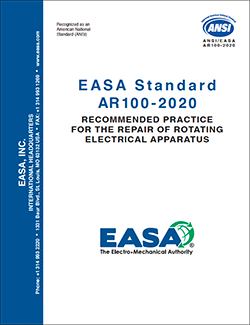
ANSI/EASA AR100-2020 cover

ANSI/EASA Standard AR100-2020
ANSI/EASA AR100-2020: Recommended Practice for the Repair of Rotating Electrical Apparatus is a must-have guide to the repair of rotating electrical machines. It establishes recommended practices in each step of the rotating electrical apparatus rewinding and rebuilding processes.

LEARN MORE & DOWNLOAD

Questions?

For information about ANSI/EASA AR100 or questions about the work on this standard, contact:

Mike Howell, PE
EASA Technical Support Specialist
+1 314 993 2220
mhowell@easa.com

ANSI Accredited Standards Developer Information

DC shunt field rewinding wire size considerations

  • January 2014
  • Number of views: 12731
  • Article rating: 5.0

Mike Howell
EASA Technical Support Specialist

When rewinding the shunt fields of a DC machine, it is important to avoid making changes that could negatively impact performance. The recommended practice is to maintain the manufacturer’s winding configuration during the repair. That is, the field circuit connection, turns per coil, mean or average length of turn (MLT) and wire size should not be changed. However, service centers do sometimes encounter issues around wire size availability. The purpose of this article is to provide some guidance for making wire size substitutions when the original size is unavailable.

LOGIN TO VIEW AND DOWNLOAD THE ARTICLE


0Upvote 0Downvote
Rate this article:
5.0
Print


Comments are only visible to subscribers.

EASA Rewind Study cover

The Effect of Repair/Rewinding on Premium Efficiency/IE3 Motors
Tests prove Premium Efficiency/IE3 Motors can be rewound without degrading efficiency.

DOWNLOAD THE FULL RESULTS

BUY PRINTED COPIES

EASA Good Practice Guide

Good Practice Guide to Maintain Motor Efficiency
Based on the 2019 and 2003 Rewind Studies of premium efficiency, energy efficient, IE2 (formerly EF1) and IE3 motors

LEARN MORE & DOWNLOAD